
Loading...
Serving Redlands, CA and surrounding areas. (909) 488-7740
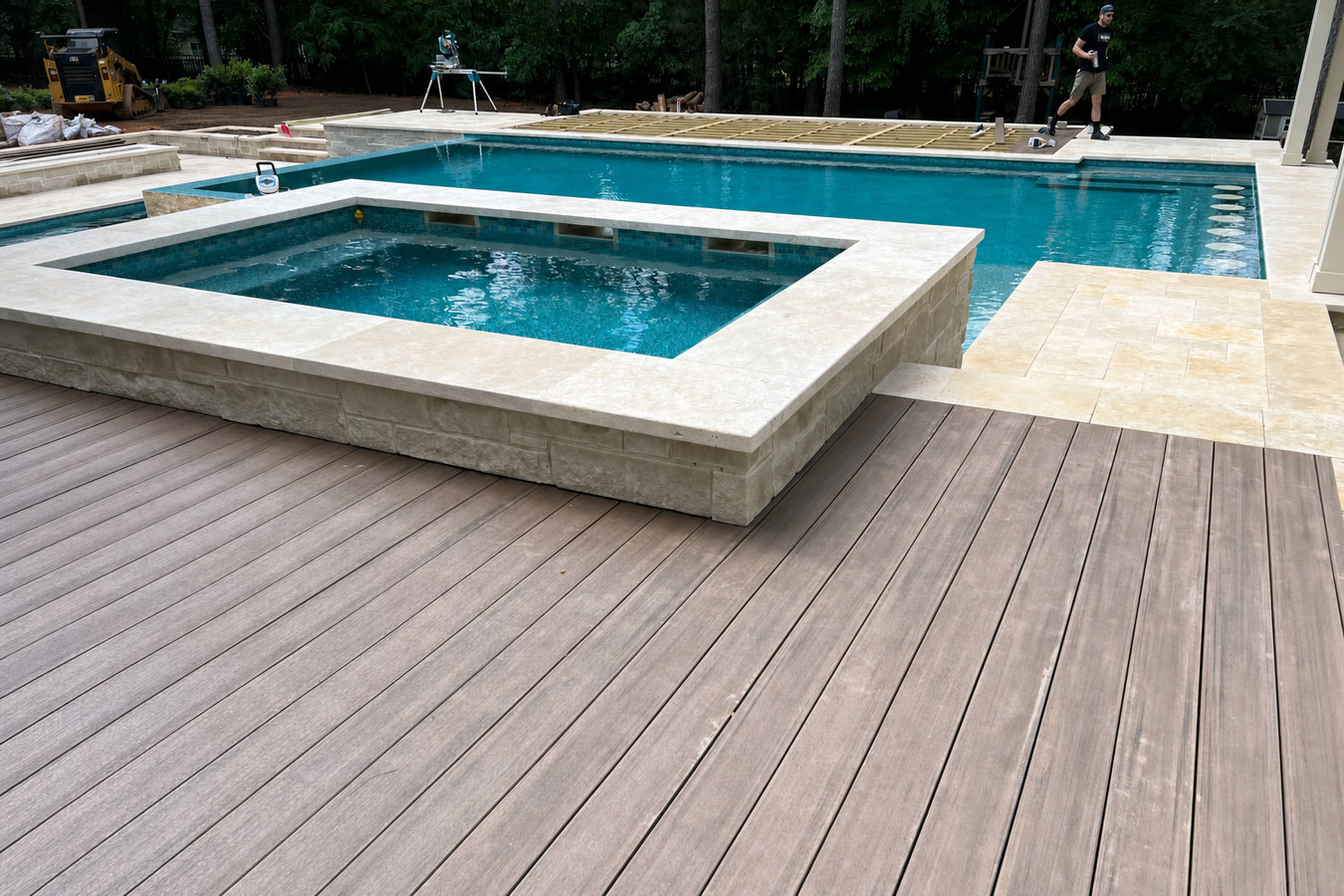
Clay soils crack most pool decks within years. We prep the ground right, pull the permits, and finish with surfaces that stay cool and grip underfoot all summer.
Clay soils crack most pool decks within years. We prep the ground right, pull the permits, and finish with surfaces that stay cool and grip underfoot all summer.
Pool deck construction in Redlands covers the paved or surfaced area surrounding your pool - installed in concrete or pavers - with most residential projects taking three to seven days of active work plus city permit processing time before construction begins.
A pool deck is one of the most-used surfaces in a Redlands home from May through October. The right deck handles the heat without burning bare feet, provides grip when wet, and stays stable through the clay soil movement that cracks poorly built decks within a few seasons. Whether you are replacing an aging original deck or building around a new pool, the decisions made during design and base preparation determine how long the finished surface lasts.
A pool deck is often just one part of a larger outdoor living project. If you are also considering adding a fence around the pool area, our vinyl fence installation service handles that work as part of the same project so you are not coordinating two separate crews.
If you have filled cracks in your pool deck before and they have reopened - or new ones have appeared nearby - that is a sign the ground beneath is moving. In Redlands, this is often caused by clay-heavy soils expanding and contracting with the wet-dry cycle of the seasons. Patching the surface again will not fix the underlying movement; at some point a full replacement is the more cost-effective answer.
If walking from the back door to the pool edge has become something you avoid on summer afternoons, your deck surface is absorbing and holding more heat than it should. Older concrete decks in Redlands - especially those with dark finishes or no sealer - can reach surface temperatures well above the air temperature on a 100-degree day. A new deck with a lighter finish or heat-reflective coating can make a real difference in how usable your outdoor space feels.
Standing water on your deck after rain or heavy pool use means the surface is not draining the way it should. Water sitting against the pool edge or near the house foundation causes long-term damage to both the deck and the structures around it. This is a drainage design problem that patching alone cannot solve - proper drainage slope needs to be built into the base.
Pool deck surfaces are designed with texture to provide grip when wet, but that texture wears down over years of foot traffic, sun exposure, and cleaning. If you or your family have slipped - or if the surface just feels less grippy than it used to - that is a safety concern worth addressing before someone gets hurt. A resurfacing or replacement restores the slip-resistant finish.
We handle the full scope from demolition of the existing deck through final inspection sign-off. That includes pulling the required City of Redlands building permit, which is not optional for this type of work - it protects your home value and ensures the project is on record when you eventually sell. Base preparation is where most pool decks fail or succeed: we compact the soil, build a proper gravel base where needed, and design the drainage slope so water moves away from the pool edge and your foundation rather than sitting against them. If you are also considering a custom deck design and build project to connect the pool area to the rest of your outdoor space, we can design both as a single cohesive scope.
Material selection depends on your budget, soil conditions, and how you want the finished space to look. We install both concrete and paver pool decks and will walk you through the trade-offs specific to your yard and your goals before any decisions are made. For HOA neighborhoods in Redlands - and many of the newer developments have active associations - we factor in the approval process from the start so design decisions are compliant before we build anything.
Best for homeowners who want a single durable surface that can be finished in a range of textures and colors at a lower upfront cost than pavers.
A good choice for yards with expansive soils - individual pavers tolerate ground movement better than a single slab, and damaged units can be replaced individually.
Full removal of the old deck surface and base, rebuilt from the ground up with proper compaction, drainage, and current material standards.
We handle the permit application with the City of Redlands and coordinate the final inspection so the project is fully documented and code-compliant.
Redlands sits at roughly 1,300 feet elevation in the Inland Empire, where summer temperatures regularly exceed 100 degrees and UV exposure is intense year-round. Concrete and stone surfaces absorb and radiate that heat, which is why surface color and finish choices matter more here than in coastal cities - a dark concrete deck in Redlands can become too hot to walk on barefoot by mid-afternoon in July. Asking your contractor about lighter-toned finishes or heat-reflective sealers is a practical question, not just an aesthetic one. Homeowners in Grand Terrace face the same summer heat conditions and benefit from the same finish considerations.
Much of the San Bernardino Valley, including parts of Redlands, sits on soils that expand when wet and contract when dry - a cycle that puts stress on any rigid surface above them. This is one of the main reasons pool decks in this region crack or shift over time, and it is why the quality of base preparation matters so much. Redlands also has a significant number of homes built between the 1950s and 1980s with original pools and aging decking that was installed under older standards. Replacing an older deck is often an opportunity to bring the area up to current safety expectations, particularly around drainage slope and slip resistance. Homeowners in Loma Linda with similarly aged properties ask the same questions about what replacement actually involves and what the city permit process looks like.
We start with a phone conversation to understand what you are looking for - size, current deck condition, and any specific concerns. We then schedule a site visit to see the space in person before writing a quote. You will hear back within one business day and the estimate visit is free.
After the visit, you receive a written estimate breaking down labor, materials, and demolition costs. Once you accept and sign, we apply for the required City of Redlands building permit. Building in one to three weeks for permit approval is a reasonable expectation - we keep you updated throughout.
The first day or two involves removing the old deck surface - the noisiest part of the project. Once cleared, we compact the soil, add a gravel base where needed, and set up drainage grades and forms. This base work is invisible once the job is done but determines how long the finished deck lasts.
The new surface goes in - poured and finished for concrete, or set and sanded for pavers. The city inspector visits to sign off on the permit, which we coordinate. Before the crew leaves for the last time, we walk the finished deck with you and confirm any maintenance instructions for the new surface.
No obligation - we will walk your property, answer your questions, and give you a written quote before you make any decisions.
(909) 488-7740We apply for the required City of Redlands building permit and coordinate the final inspection as a standard part of every pool deck project. A contractor who suggests skipping the permit is one to avoid - it protects your home value and your family, and it is required. You receive a copy of the final inspection card when the job is complete.
Most pool deck cracking in the Redlands area traces back to inadequate ground preparation, not the surface material itself. We compact the soil, grade for drainage, and build a proper base so the surface above it stays stable. This is the work that determines whether your deck lasts five years or twenty-five.
We recommend lighter-toned finishes and, where appropriate, heat-reflective sealers for Redlands pool decks. A dark concrete surface on a 105-degree July afternoon becomes a safety issue, not just a comfort one. We talk through surface temperature performance during design - not as an afterthought at the end.
We reference construction best practices from the Pool and Hot Tub Alliance to stay current on pool-adjacent construction standards. That includes drainage slope requirements, surface texture guidance for wet-area safety, and best practices for protecting the pool structure during construction.
Every pool deck project we take on ends with a full walkthrough and a written record of the work completed. You know exactly what was built, what the inspection confirmed, and what maintenance the new surface needs to stay in good shape.
Complete your pool area with a low-maintenance vinyl fence that holds up to Redlands heat and UV without painting or staining.
Learn MoreExpand beyond the pool surround with a custom-designed deck that connects your indoor and outdoor living spaces.
Learn MoreSummer project slots fill quickly - reach out now to get your estimate scheduled and your permit process started before the busy season closes.